
The single most common mistake we see with brakes pads isn't overspending or under-spending, it's people selecting the wrong compound for how they drive.
Put a full race pad on a road car and the brakes will feel dead until the discs come up to temperature. Put a soft, low-dust street pad on a track car and it boils its fluid by the third lap.
Thankfully, DIXCEL builds a compound for almost every kind of driving, and this guide runs through the range so you can match the pad to the way you use the car.

Quick Verdict
For a daily driver where clean wheels matter, fit Dixcel M Type. It dusts less than anything else in the range. Want more bite for spirited road driving without the mess of a sport pad? Step up to ES Type. For a car that mixes road use with regular track days, sprints or hillclimbs, Z Type is the do-everything all-rounder and our best-selling performance compound. Once you're racing on slicks or R-comps, move to the motorsport tier: RA and RE for circuit work, Specom for endurance.
How DIXCEL Organises Its Range
DIXCEL splits its pads into three tiers based on what the pad is built to do. Once you know the tier, the letter code makes sense. A higher tier isn't a better pad. Fit a Specom to a daily-driven WRX and you've made the car slower to stop than it was on M Type: no bite at 30°C, dust across the wheels, discs worn down fast. Each compound works in one temperature window, and your job is to land inside it.
| Tier | Compounds | Built For | Character |
|---|---|---|---|
| Street | M, ES | Commuting and enthusiastic road use | Quiet, low dust, works from cold |
| Sport | S, Z | Road plus sprints and light circuit | More bite, more dust |
| Race | RA, RE, Specom | Competition only | Needs heat, wears discs, noisy cold |
1. Street

These are the pads for daily driving and spirited road use. They stay quiet, they work from cold, and they keep your wheels clean. If your car never sees a circuit, look here first.
| Compound | Best For | Temp Range (°C) | Friction (μ) | Dust |
|---|---|---|---|---|
| M Type | Low-dust daily driver | 0–500 | ~0.40 avg | Ultra Low |
| ES Type | Day-to-day / Spirited road | 0–600 | ~0.48 | Low |
- M Type. The one to fit when clean wheels matter. Works from cold to about 500°C at around 0.40 μ, and it dusts less than any other pad DIXCEL makes. Your wheels stay clean and it hits the sweet spot for a daily driver
- ES Type. "Extra Speed" for drivers who want a cost effective pad that won't let them down on a good bit of road. Temp range extends to about 600°C and lifts friction to around 0.48 μ for a real jump in bite. More dust than M Type, but a fair trade that stops short of full sport-pad territory
Torque GT Take
ES Type has been our default workshop pad for some time owing to its cost vs performance benefits, but if you're more concerned about dust than braking power, M Type is for you
2. Sport

High-friction road pads that also handle sprints and the odd track session. You get more bite and heat capacity than the street tier, and you pay for it in dust and disc wear.
| Compound | Best For | Temp Range (°C) | Friction (μ) | Dust |
|---|---|---|---|---|
| S Type | Spirited road use | 0–650 | 0.38 avg | Medium |
| Z Type | Road, sprint & circuit | 0–850 | 0.50–0.67 (0.57 avg) | Medium |
- S Type. The street-sport pad for cars that see the odd track day. Friction from cold to roughly 650°C at around 0.38 μ with medium dust. More bite than a street pad and no complaints on a spirited day out
- Z Type. DIXCEL's do-everything performance pad. Runs from cold to about 850°C with friction from 0.50 to 0.67 (around 0.57 average), so it bites hard and holds on as the temperature climbs. Higher dust and disc-wear is the trade. The right call for a performance car that see regular track days, sprints or hillclimbs, but will be equally at home on the street
Torque GT Take
Z Type is our best-selling performance compound and offers the best balance of daily usability with track-ready performance. S Type is the smarter choice for a lightweight car where you want sharp road response but don't plan much, if any, track time
3. Race

Read this first: Every pad in Race tier works only once the brakes are hot. On a cold street car they'll feel wooden, noisy and under-braked. Your factory pads will out-brake them. They will also wear discs fast, squeal at low temperatures and throw heavy dust. Serious track abuse is the only reason to fit them.
| Compound | Best For | Temp Range (°C) | Friction (μ) | Dust |
|---|---|---|---|---|
| RA Type | Circuit / sprint racing | 200–900 | 0.40~0.45 avg | High |
| RE Type | ABS-friendly Circuit / sprint | 200–900+ | 0.40~0.45 avg | High |
| Specom | Endurance racing | 200–900+ | High, stable | High |
- RA Type. Circuit racing pad with strong initial bite, built for sprint racing and committed track-day cars on slicks or R-comps. Works from about 200°C to 900°C at 0.40–0.51 μ. Very high dust
- RE Type. Essentially the same as RA, but with a lower initial bite, making it more compatible with modern ABS systems.
- Specom. The endurance compound, built for long stints where consistency and pad life count as much as outright grip. Shares the 200°C-to-900°C-plus window and holds high, stable friction across a full session. Very high dust, competition use only
Torque GT Take
RA is the entry point for sprint racing and serious track cars on grippy track-day tyres. Step up to RE if your track car still has ABS and you want to minimise interference. Choose Specom when you run long sessions and can't afford the pad fading late in a stint.
4. Full Compound Comparison Table
At-a-glance specs for the whole range. All figures come from DIXCEL's published technical data.
| Compound | Tier | Temp Range (°C) | Friction (μ) | Dust | Road Use? |
|---|---|---|---|---|---|
| M Type | Street / Low Dust | 0–500 | ~0.40 avg | Ultra Low | Yes |
| ES Type | Street / Spirited | 0–600 | ~0.48 | Low | Yes |
| S Type | Sport / Spirited | 0–700 | ~0.54 | Medium | Yes |
| Z Type | Sport / Track-day | 0–850 | 0.50–0.67 (0.57 avg) | Medium | Yes |
| RA Type | Race / Circuit | 200–900 | 0.40~0.45 avg | High | No |
| RE Type | Race / Circuit (ABS compatible) | 200–900 | 0.40~0.45 avg | High | No |
| Specom | Race / Endurance | 200–900+ | High, stable | High | No |
5. Which DIXCEL Compound Should I Run?
Pick based on how you drive the car, not how you picture driving it. Here's the short guide:
- Daily driver, want clean wheels: M Type
- Daily driver with some spirited drives: ES Type
- Regular spirited B-road driving: ES Type/S Type
- Sports car with the odd track day: S Type/Z Type
- Driving day-to-day with regular track days: Z Type
- Sprints, hillclimbs and grass roots motorsport: Z Type/RA Type
- Sprint racing or a serious track car on slicks/R-comps: RA Type
- High-performance track cars with ABS in place: RE Type
- Endurance racing or long sessions where pad life counts: Specom
Torque GT Take
Most people who get this wrong over-spec. If your car never turns a wheel on track, match the compound to your real driving. You get a better pad and cleaner wheels for it.
6. Can I Mix Compounds Front and Rear?
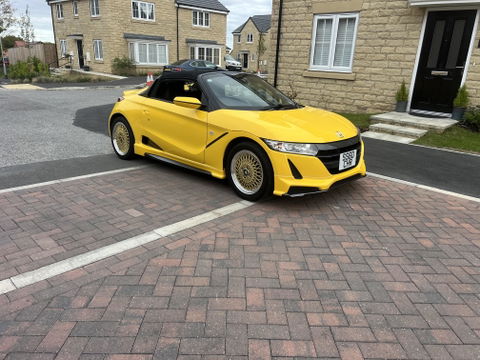
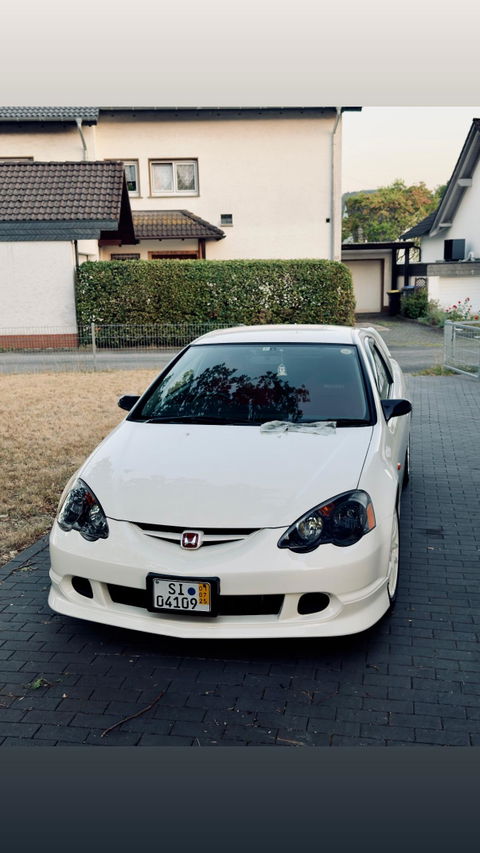
Front and rear pads don't have to match, and there are good reasons to run them differently. Take a rear-heavy or mid-engined car: pair Z Type on the front with M Type on the rear and you cut rear dust without losing stopping power, since the fronts do around 70% of the work. For lightweight FWD cars that are daily driven cars that also see track use. (such as the Civic or Integra Type R) we recommend Z Type front pads matched with ES rear.
When in doubt, match compounds front and rear, or Contact Us and we'll advise.

7. Bedding-In: Not Optional
Every DIXCEL compound, street or race, needs bedding in before you can judge it. Bedding lays an even film of pad material onto the disc face, and that transfer layer generates the friction once the brakes are hot. Skip it and a fresh set of pads will feel worse than the old ones. It's the number-one reason people come back unhappy.
- Street compounds (M, ES, S, Z). Make 8–10 medium-pressure stops from around 60 km/h down to 20 km/h, close enough together that the brakes don't fully cool between them. Then drive gently for 5–10 minutes without coming to a complete stop, so everything cools evenly. Avoid hard stops for the first 200 km
- Motorsport compounds (RA, RE, Specom). Bed these on track. Start at around 50% braking for about 5 minutes, come back to the pits and rest for 5 minutes, then repeat at 70–80% braking for around 10 minutes with a 10-minute cool-down. Skip this and you'll get inconsistent friction and disc damage
Squeal or weak bite usually traces back to incomplete bedding or a compound mismatch.
FAQ
Can I use DIXCEL RA or Specom pads on the street?
You can, but you shouldn't. These motorsport compounds work only once hot. On a cold road car they feel wooden and under-braked, they squeal, and they wear discs fast. On the road the factory pad will out-brake them. Stick to the street or street/sport tiers.
Which DIXCEL compound has the least brake dust?
M Type. It dusts less than any other pad in the DIXCEL range.
Do I need to change discs when I fit DIXCEL pads?
Not always. If your discs are in good condition and within spec, you can bed a new set of pads onto them. If they're worn, scored or heat-damaged, replace them.
Will DIXCEL pads work with my ABS system?
Yes. DIXCEL pads work with the car's factory braking and ABS systems. The one thing to avoid is mismatching tiers front-to-rear in a way that shifts brake bias beyond what the ABS was tuned for (see the mixed-compound section above).
Ready to Choose?
Browse the full DIXCEL range, filter to your compound, or go straight to your vehicle page for confirmed fitment. Every DIXCEL pad sold through Torque GT is 100% genuine Japanese product with factory-scorched surfaces for faster bedding-in, and every set ships with DIXCEL's anti-squeal grease.
Not sure which compound suits your build? Contact Us with your car, how you drive it and what you want to fix, and we'll point you at the right pad.