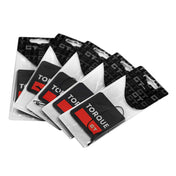

Spoon Sports Rigid Collars are one of the cheapest upgrades you can fit to almost any modern car, and one of the few that improves how it drives on the road before you ever reach a circuit. They tackle a problem nearly every mass-produced car leaves the factory with, they cost a fraction of a damper or a set of arms, and they fit far more than just Hondas. This guide covers who Spoon Sports are, what Rigid Collars actually do, why the problem exists in the first place, how the collars solve it, what you feel afterwards and how they go on.

Quick Verdict
Rigid Collars fill the slack left around your factory subframe bolts, locking the subframe and chassis together so they behave like one part rather than two. The result is tighter, more predictable handling, better straight-line stability and noticeably less steering correction over bumps, all for the price of a workshop afternoon and a four-wheel alignment. If you want the biggest improvement in how your car feels for the least money, this is where we would start, and you do not need to own a Honda to benefit.
1. Who Spoon Sports Are
Spoon Sports was founded in Japan in 1988 by Tatsuru Ichishima, and over the decades since it has become one of the most respected names in Honda performance. The company built its reputation on the track, developing and racing Hondas at circuits like Suzuka and Tsukuba, then carrying what it learned back into the parts it sells. That motorsport pedigree is the point. Spoon does not chase headline power figures, it focuses on the details that make a car work better as a whole, which is exactly the thinking behind the Rigid Collar.
Torque GT is the official UK and EU distributor for Spoon Sports, so the range you see here comes direct rather than through a grey import.
Torque GT Take
When a company that wins races on tiny, technical circuits puts its name on a cheap bolt-on, it is worth paying attention. Spoon makes its money on getting the small things right.
2. What Rigid Collars Are and Why They Exist

To understand the collars you first have to understand how your car was built. On the production line the engine and suspension are usually mounted to the subframe, then the body is lowered over the top and the two are bolted together. To make that marriage quick and repeatable, manufacturers drill the holes in both the subframe and the chassis larger than the bolt actually needs. A bigger hole means less precise alignment is required to get the bolt through, which saves seconds on every car and adds up to real money across a production run.
The trade-off lands on you. That oversized hole leaves a gap around every subframe bolt, and a gap means movement. The subframe can shift relative to the chassis, which shows up as vibration and a vague, slightly disconnected feel, even pottering around town at low speed. Spoon Sports Rigid Collars are precision-machined aluminium spacers that close that gap.
Torque GT Take
Nothing is wrong with your car, it left the factory exactly as designed. The collars simply correct a compromise the manufacturer made for the sake of the assembly line, not for the way it drives.
3. How Rigid Collars Work

Each collar slides over the subframe bolt and sits between the subframe and the chassis, and it does two jobs at once. The vertical section locates on a taper into both the chassis and the subframe, taking up the slack around the bolt and centring the subframe far more precisely than the factory ever did. That alone cuts the lateral movement and sharpens how consistently everything lines up.
The second job is the clever part. The subframe and chassis are both steel, and unless their mating faces are perfectly flat, which they almost never are, they do not sit flush against each other. As you torque the subframe bolts down, the softer aluminium base of the collar moulds itself into the surface profile of both steel faces. It fills the high and low spots and dramatically increases the contact area, clamping the two parts together far more tightly than the bare bolt could. The subframe and chassis stop working against each other and start behaving like a single structure. The end result is about as close to welding the subframe to the chassis as you can get without actually doing it, a step normally reserved for full motorsport builds.
Torque GT Take
The taper kills the side-to-side slop and the aluminium base kills the gaps in the surfaces. Together they turn two loosely bolted parts into one solid unit.
4. What You Will Feel on the Road
A tighter chassis improves a car from almost every angle, and the collars make their case the moment you get moving. The clearest gain is straight-line stability. With the subframe no longer shuffling around under the car, your suspension can finally work the way it was designed to instead of fighting movement underneath it. That shows up as a big reduction in the steering corrections you need to keep the car straight over bumps and ruts.
It also takes the edge off sharp jolts, which makes for calmer, smoother progress, and smoother is usually both safer and quicker. Wheel alignment stays more consistent as the car moves, even over bumps at speed, so the car does what you expect when you ask it to. Owners tend to describe the overall effect as more predictable, with better ride quality and a clearer sense of what the front end is doing.
The table below sets out what the collars change for different kinds of driver.
| Use Case | What Rigid Collars Change | Worth Fitting? |
|---|---|---|
| Daily driver | Less vibration, calmer ride over poor roads, tighter low-speed feel | Yes, the value pick for any commuter |
| Fast road | Sharper turn-in, more stable over bumps, less steering correction | Yes, one of the best per-pound upgrades |
| Track use | More consistent alignment under load, near-welded subframe rigidity | Yes, a cheap foundation for the rest of the setup |
Torque GT Take
This is not a placebo upgrade you have to convince yourself you can feel. The first decent bumpy corner usually does the convincing for you.
5. Fitting Rigid Collars

In most cases this is a reasonably simple workshop job. The subframe is unbolted and lowered by around 40mm, which opens up enough room to slot the collars in. The bolts go back in, the assembly is lifted and torqued back to the chassis, and that is the bulk of the work. Contrary to a common worry, you do not normally have to fully remove the subframe or strip the parts mounted to it. It only needs lowering, which can often be done without disconnecting items like the exhaust or driveshafts.

One step is not optional. A full four-wheel alignment afterwards is essential. Moving the subframe shifts your alignment settings, and your existing alignment was set up around the subframe misalignment that the collars have just corrected. Skip the alignment and you give up much of the benefit, so budget for it as part of the fit.
Torque GT Take
Treat the alignment as part of the job, not an optional extra. The collars do their work, the alignment lets you actually feel it.
6. Will They Fit Your Car

You do not need to own a Honda. Spoon Sports is best known the world over for its Honda tuning, but the Rigid Collar range reaches well beyond it. Kits are made for a host of Japanese models from Nissan, Toyota and Mitsubishi, and a wide spread of European cars too, including models from Audi, BMW, Porsche, Mercedes, Alfa Romeo, Renault and Volvo. The factory tolerance problem the collars solve is near universal, so the benefit travels across makes.
Fitment is application-specific, so the simplest way to check is to find your car on the full range page below.
Torque GT Take
If it has a bolt-on subframe, there is a good chance a kit exists for it. Check your model and you may be pleasantly surprised.
7. FAQ
What do Spoon Rigid Collars actually do?
They fill the gap left around your factory subframe bolts, locating the subframe precisely against the chassis and clamping the two together so they behave like one part. That reduces movement and vibration and gives tighter, more consistent handling.
Do Rigid Collars only fit Hondas?
No. While Spoon Sports is famous for Honda tuning, Rigid Collars are made for a wide range of other makes too, including Nissan, Toyota, Mitsubishi, Audi, BMW, Porsche, Mercedes, Alfa Romeo, Renault and Volvo. Fitment is model-specific, so check the range for your car.
Will I really feel the difference?
Most owners do, and usually straight away. The clearest change is improved straight-line stability and far less steering correction needed over bumps, along with a calmer ride and sharper steering feel.
Do I need a wheel alignment after fitting Rigid Collars?
Yes, a full four-wheel alignment is essential. Lowering and refitting the subframe changes your alignment, and your old settings were based on the subframe misalignment the collars have now corrected.
Does the subframe have to come all the way out?
Usually not. In most cases the subframe only needs lowering by around 40mm to slot the collars in, which can often be done without removing the exhaust or driveshafts.
Are Rigid Collars worth it for a daily driver?
Yes. They are one of the most cost-effective upgrades available and the benefits show up at normal road speeds, not just on track, which makes them an easy choice for a daily car.